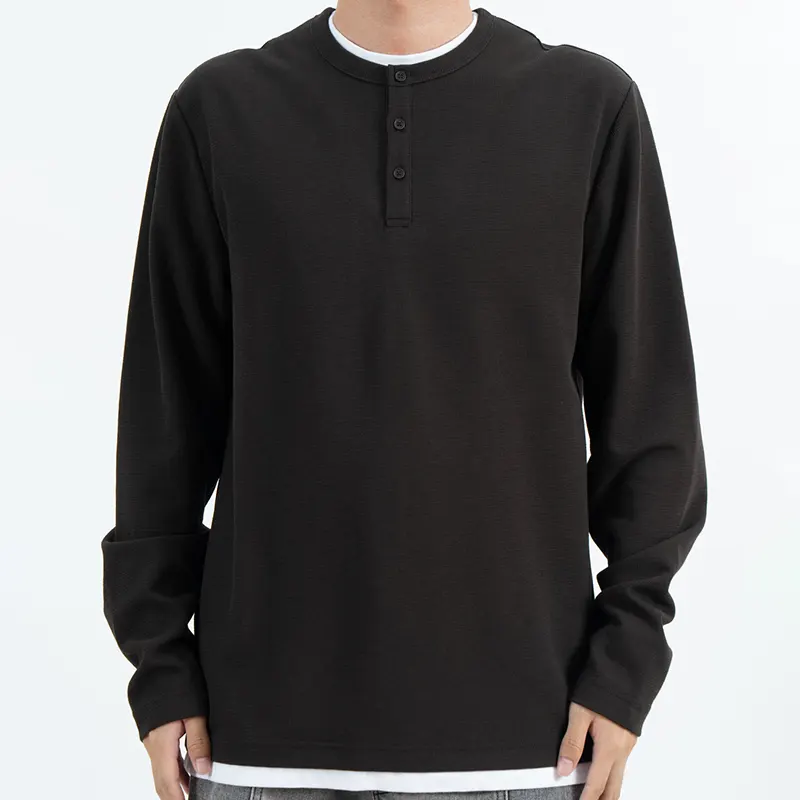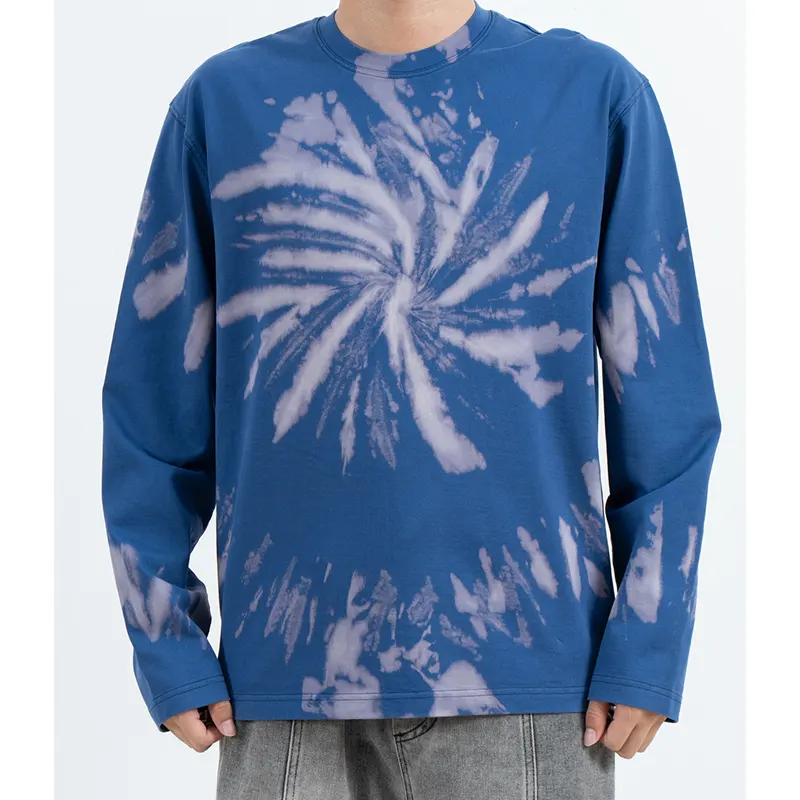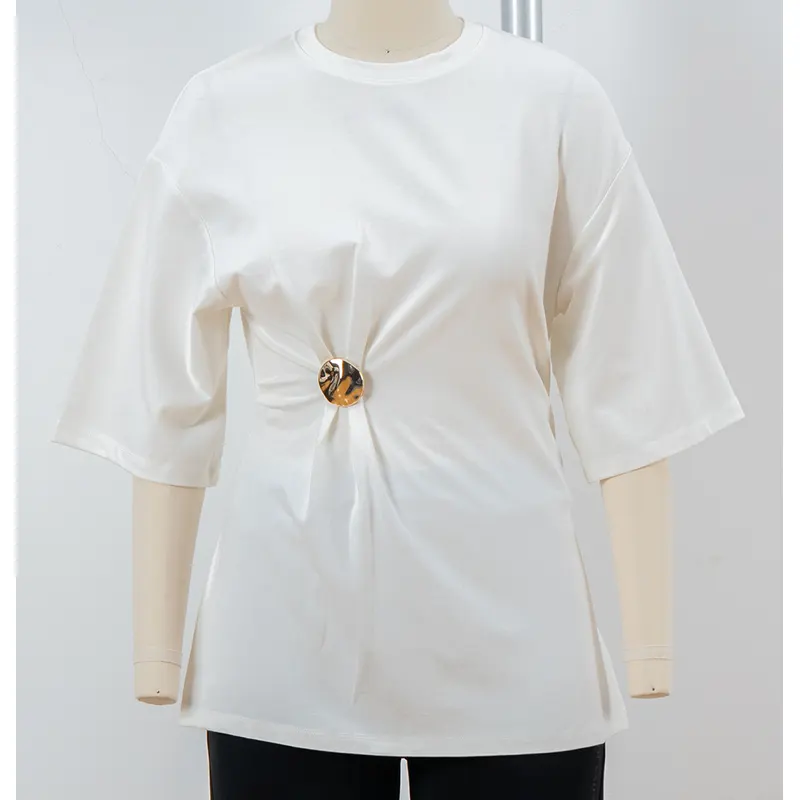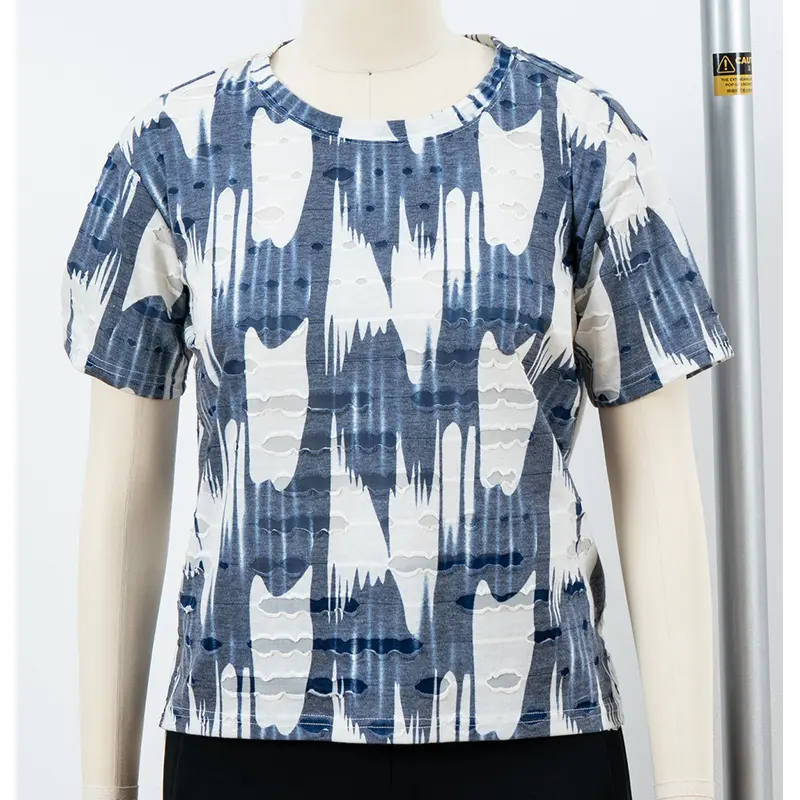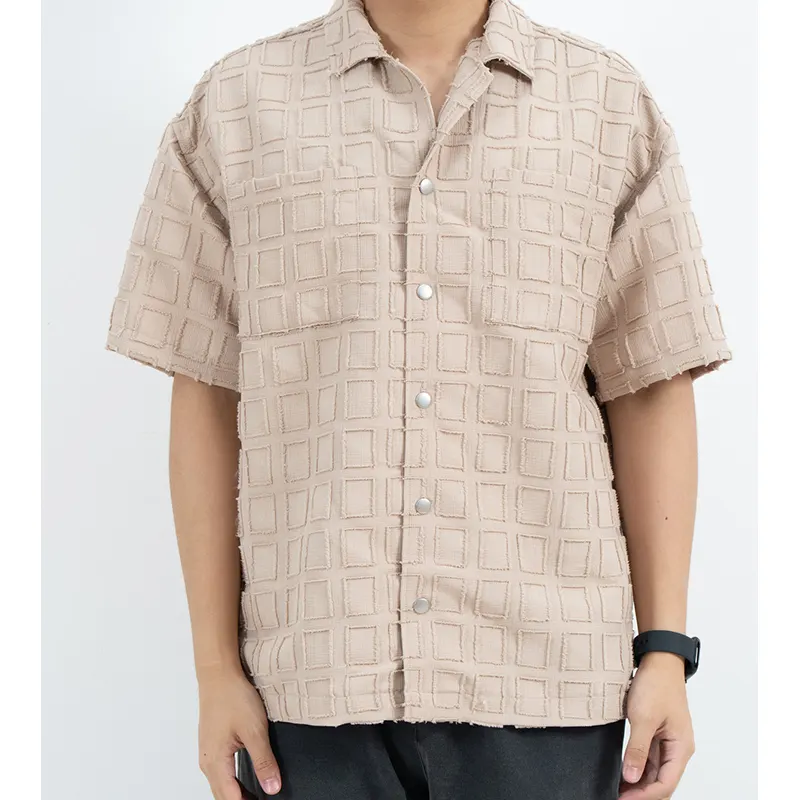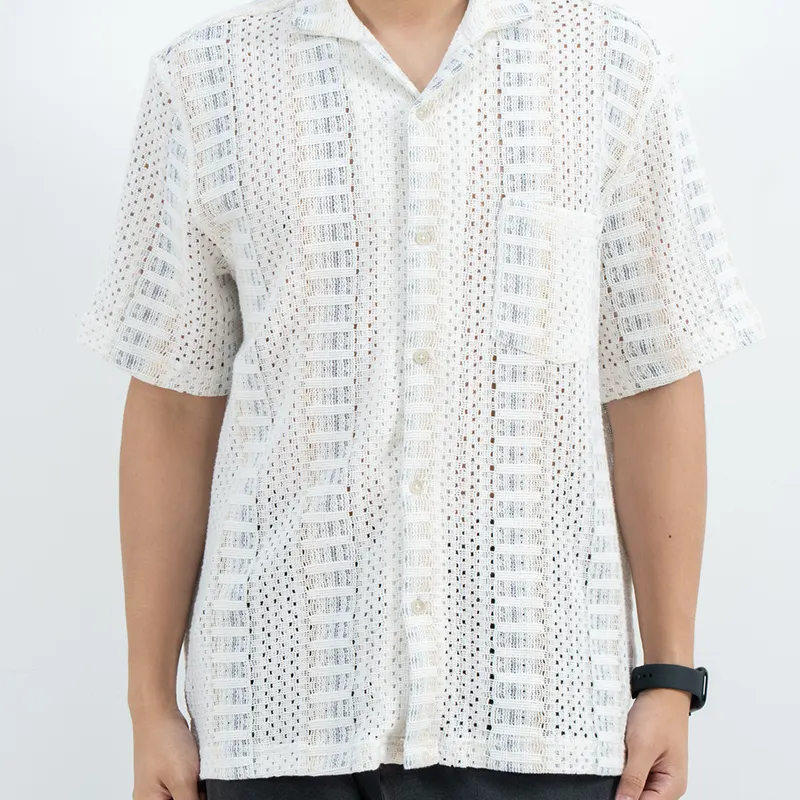
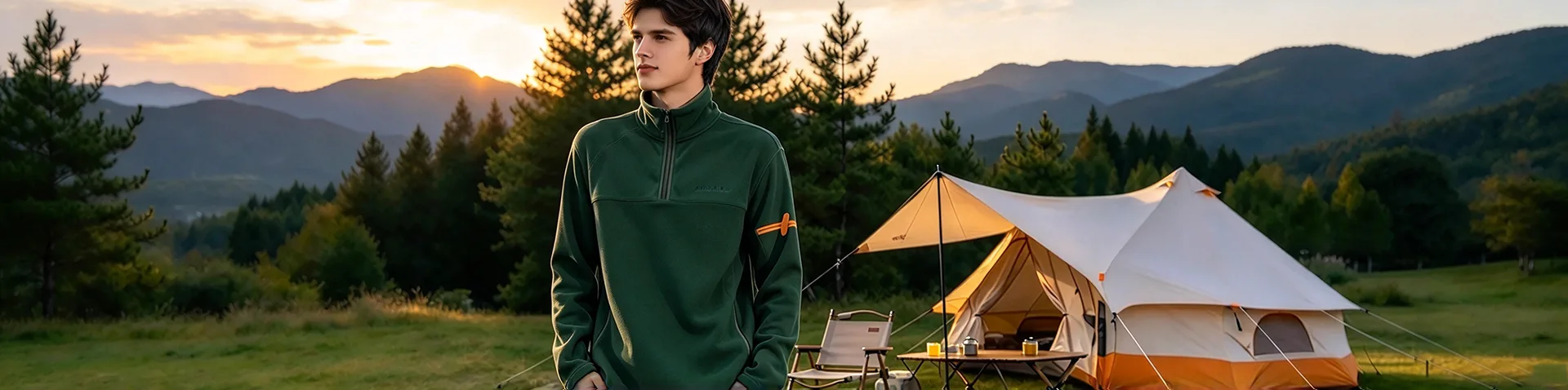
For custom Shirts, Dongbang focuses on texture-driven design where the fabric surface itself becomes the main feature. Whether developing intricate openwork, raised grid patterns, or relaxed short-sleeve silhouettes, the material dictates the construction. Ningbo Haishu Dongbang Garment Co., Ltd. provides full OEM/ODM support—from custom fabric sourcing and knitting to precise pattern engineering for collars, plackets, and pockets. We ensure your chosen material character translates perfectly into a wearable, commercially viable garment.
How can texture become the main feature of a shirt?
Let the surface determine how much additional detail the shirt needs. Open spaces, a raised motif or a pronounced grid can make a simple silhouette distinctive; decoration should be selected with that existing visual information in mind.
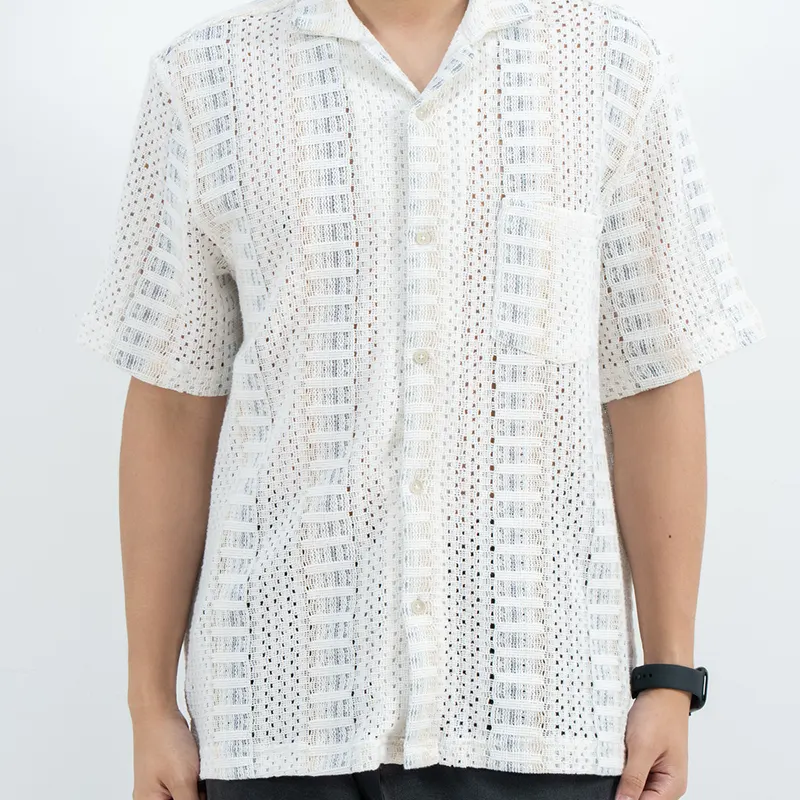
DB0020
Openwork Short Sleeve Shirt
Combines an openwork surface with a camp collar and chest pocket. The garment underneath remains visible, making transparency part of the design. A custom version should define how open the surface should appear and whether the shirt is intended to be worn alone or over another piece.
View Product Details →
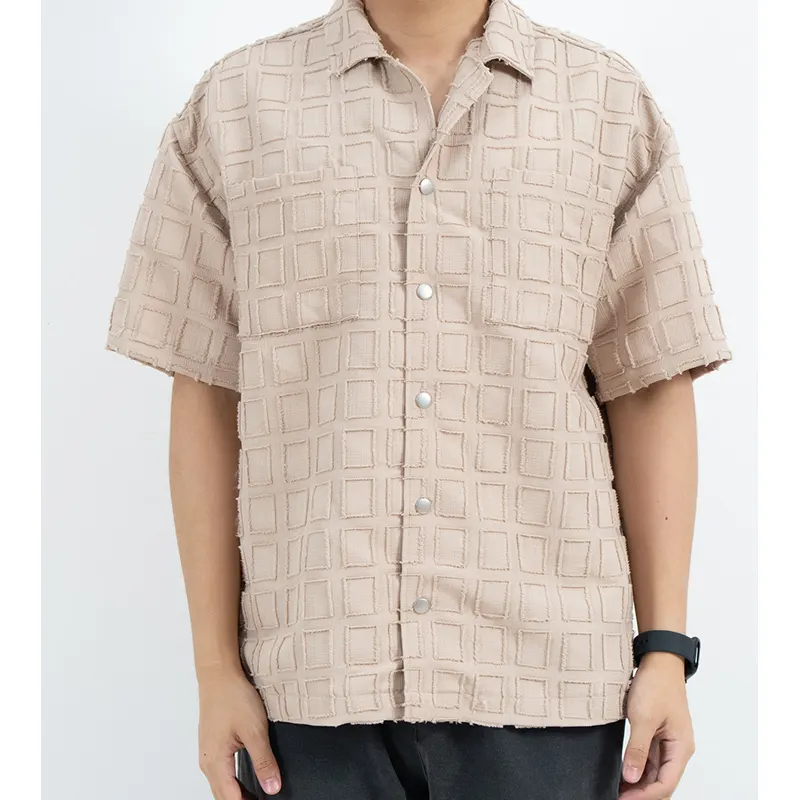
DB0024
Textured Short Sleeve Shirt
Uses a raised grid, boxy body and two chest pockets. The repeated surface and paired pockets give the front a broader, more structured appearance. Pocket scale and placement should support the grid, especially where an attached panel interrupts the motif.
View Product Details →
These directions need different forms of restraint. An openwork shirt may benefit from leaving clear areas of surface, while a raised pattern can make even a small label or button choice visually significant. Excess artwork can compete with the material that attracted the buyer in the first place.
How should the shirt's construction respond to the material?
Give the collar, front and pockets enough support to hold their intended shape without making them disproportionately stiff or bulky. The correct solution depends on how the selected texture behaves when folded, joined and reinforced.
| Area | Openwork consideration | Raised-texture consideration |
|---|---|---|
| Collar and facing | Support around open areas and visible inside edges | Thickness where material folds back on itself |
| Pocket attachment | Stability of the edge and visibility through the pocket | Motif alignment and bulk around folded edges |
| Seams and hems | Secure joins without obscuring the open effect | Managing thickness while keeping the surface clear |
A camp collar should connect cleanly to the front opening. Its angle and width influence the balance of a short, boxy body. Confirm whether the buyer wants the shirt mainly open, closed or used both ways, then review the front edge and hem in those positions.
Buttons and buttonholes also belong in the material trial. Their size, spacing and support affect both operation and appearance. An approved swatch alone will not show how the front hangs after these elements are assembled.
What wearing role suits the selected shirt direction?
Decide whether the garment provides coverage, acts as a light visual layer or forms part of a coordinated outfit. That role gives meaning to choices about transparency, body width, sleeve opening and length.
For an open layer, review the contrast with the intended inner garment. A pale openwork shirt can appear very different over a dark base, and a busy inner graphic may compete with the surface. The product reference should therefore show the intended relationship, even if the inner piece is ordered separately.
How can a texture concept be extended without losing its identity?
Keep the surface recognizable while changing a useful aspect of the product. Color, sleeve length, pocket arrangement or a matching bottom may broaden the collection, provided the material remains suitable for the new construction.
Color development should account for shadows and the material beneath an open surface. A raised grid can make one shade appear lighter or darker across the garment. Compare the complete shirt under consistent light before approving a collection color.
If a coordinating short or trouser is planned, evaluate its material demands separately. A fabric that hangs attractively from the shoulder may need another construction or support strategy at the seat, waistband and pockets. The goal is a related outfit with workable garments, rather than using one material everywhere by default.
Frequently Asked Questions
Can a sleeve tab be added for a rolled-sleeve option?
It may be developed if the material and sleeve dimensions suit the folded arrangement. Review the tab attachment and the thickness created by the roll.
Can the lower hem be curved instead of straight?
Yes, subject to pattern and material review. The change affects side length and the way a raised or open pattern finishes at the edge.
Can the shirt be supplied with buyer-specific hangtags?
Labels and packaging requirements can be developed for the order, subject to evaluation. Provide the artwork, dimensions and attachment instructions.
Can you develop custom textured fabrics from scratch?
Yes. We work with long-term fabric mills to develop custom jacquards, openwork, and raised grid fabrics. We can adjust the composition, pattern scale, and weight based on your technical requirements and target price.
Do you offer custom sizing and pattern adjustments?
Absolutely. We can grade your base size according to your market's size chart (US, EU, Asia). We also adjust the pattern for specific fits, such as a relaxed boxy shape or a tailored silhouette, ensuring the texture falls correctly.
What is the standard MOQ for custom texture shirts?
Our standard MOQ is typically 500 pieces per style/color. For custom-developed fabrics or specialized dyeing processes, the MOQ may be higher depending on the mill's minimum requirements.
Share the texture or swatch that should lead your shirt design, along with the intended wearing role, for a material and construction discussion.
Start Your Shirt Project