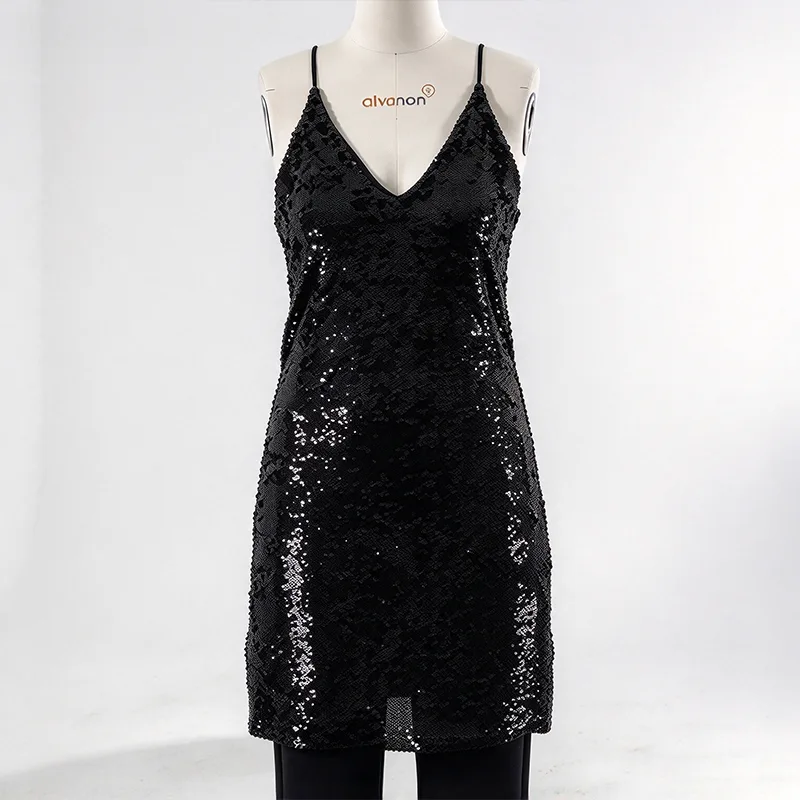

Custom Dresses from Dongbang are developed around the occasion, silhouette and way the garment moves on the body. A belted midi, a close-fitting dress and a printed slip style create different expectations of coverage and drape. Ningbo Haishu Dongbang Garment Co., Ltd. supports buyers in translating those expectations into a clear design and sampling direction.
Which Dress Direction Best Expresses the Collection's Occasion?
Choose the wearing role first, then identify the feature that should lead the silhouette. A dress for relaxed daywear may prioritize an adjustable waist and easy movement. A closer occasion style may place more attention on the neckline and body line, while a printed seasonal piece can use surface and lightness as its main expression.
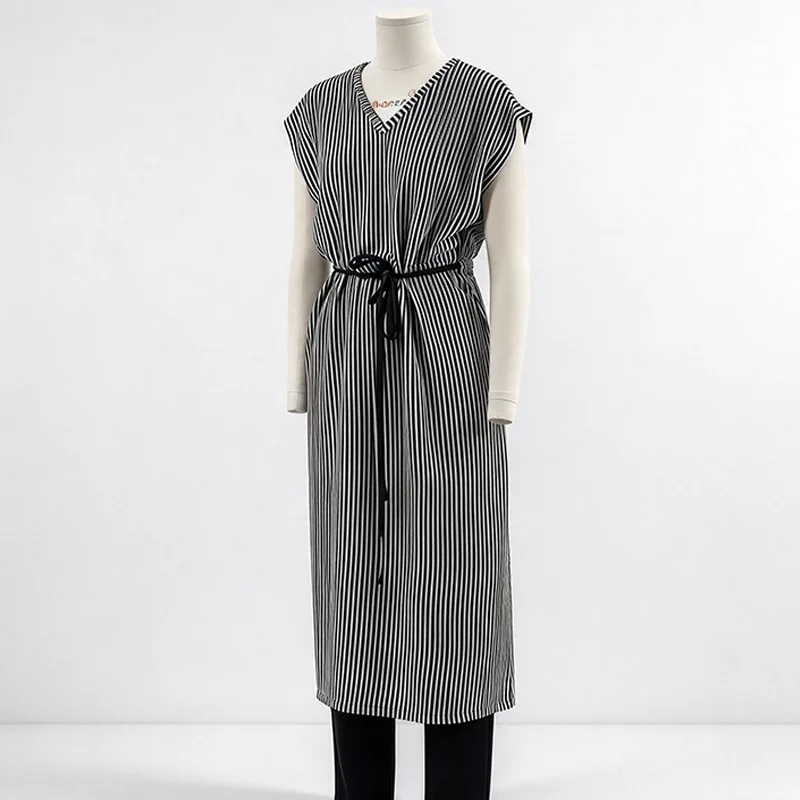
Striped Midi Dress DB0010
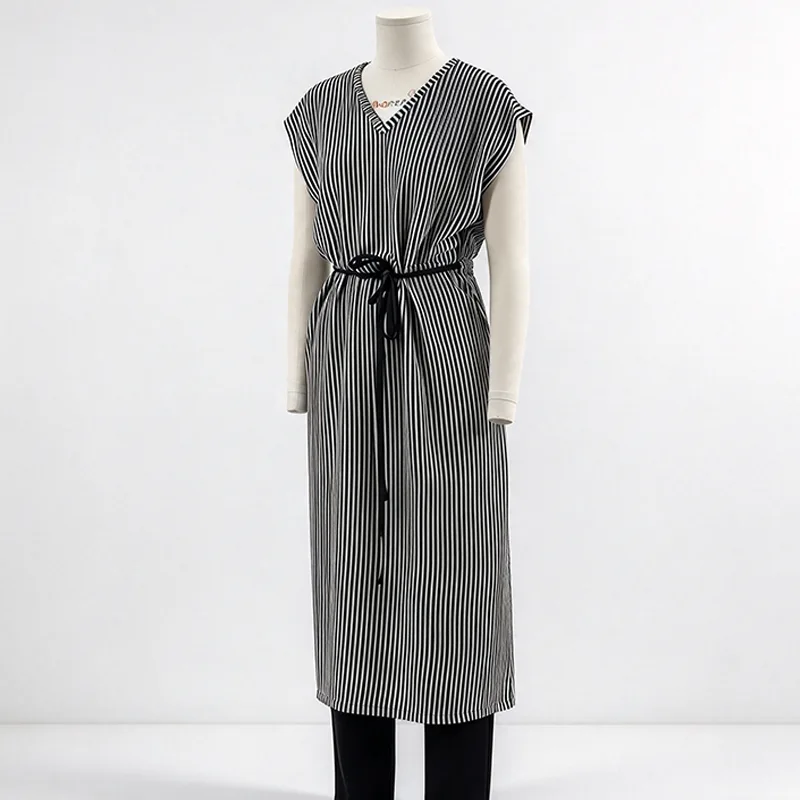
Combines vertical stripes, a V-neck, extended shoulders and a cord belt. The belt changes how the waist is defined without removing the longer visual line. This direction gives a buyer a starting point for a dress whose appearance can shift between a looser fall and a more shaped waist.
View Product Details →
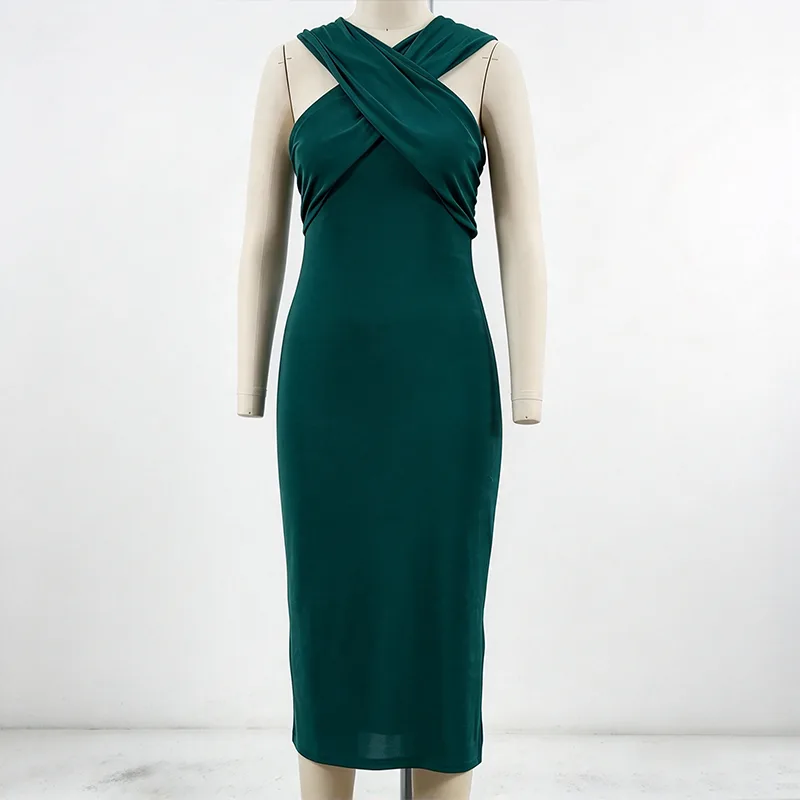
Bodycon Midi Dress DB0011
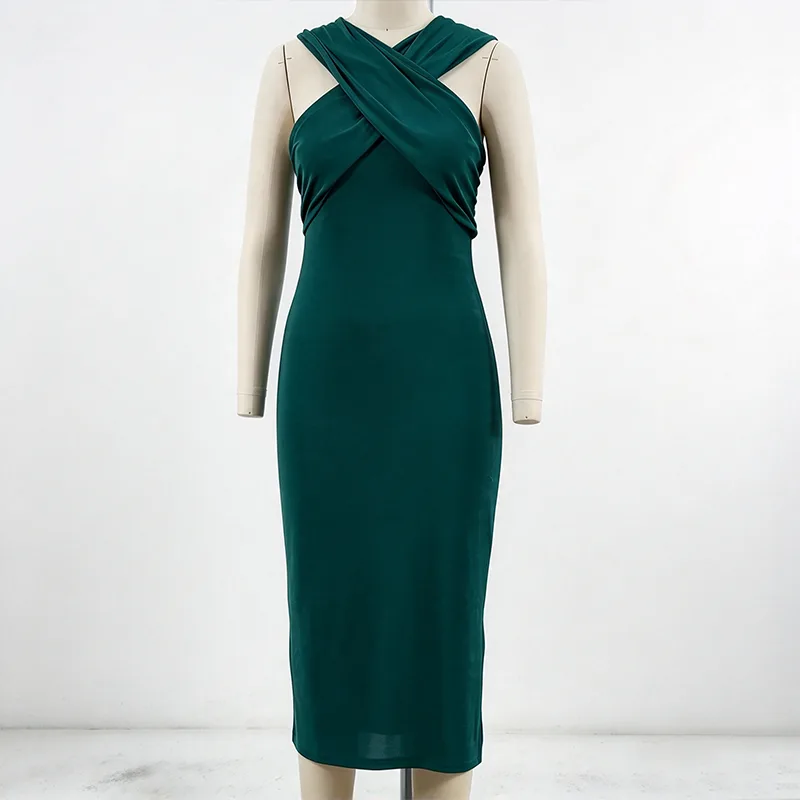
Uses a cross-neck, draped front and side slit. It draws attention to the relationship between the upper opening, the close body and the movement allowed by the skirt. A custom version needs careful consideration of stretch, recovery and coverage so the draped detail remains controlled when worn.
View Product Details →
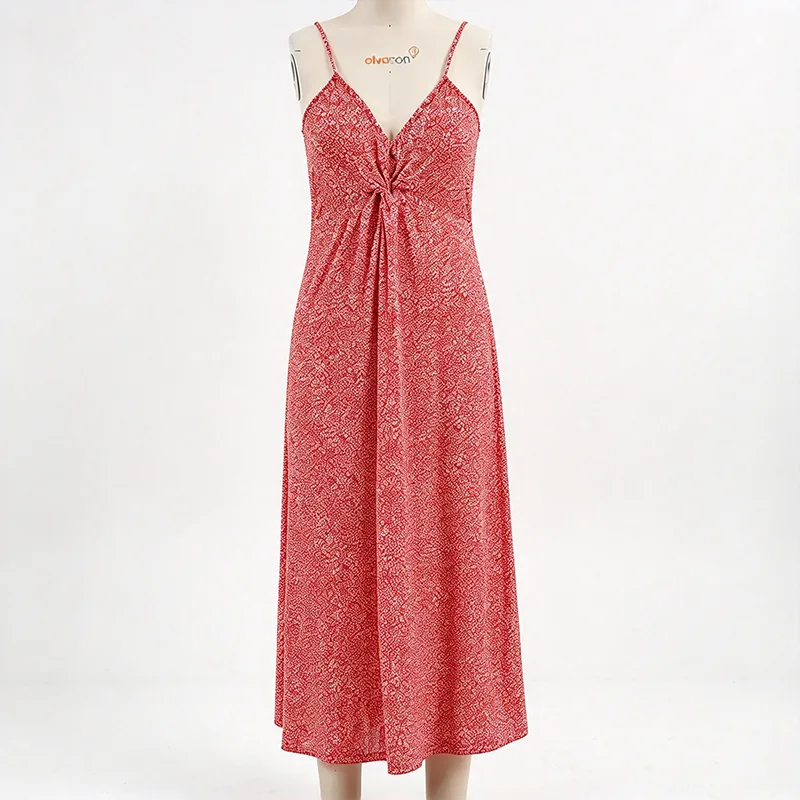
Printed Slip Dress DB0013
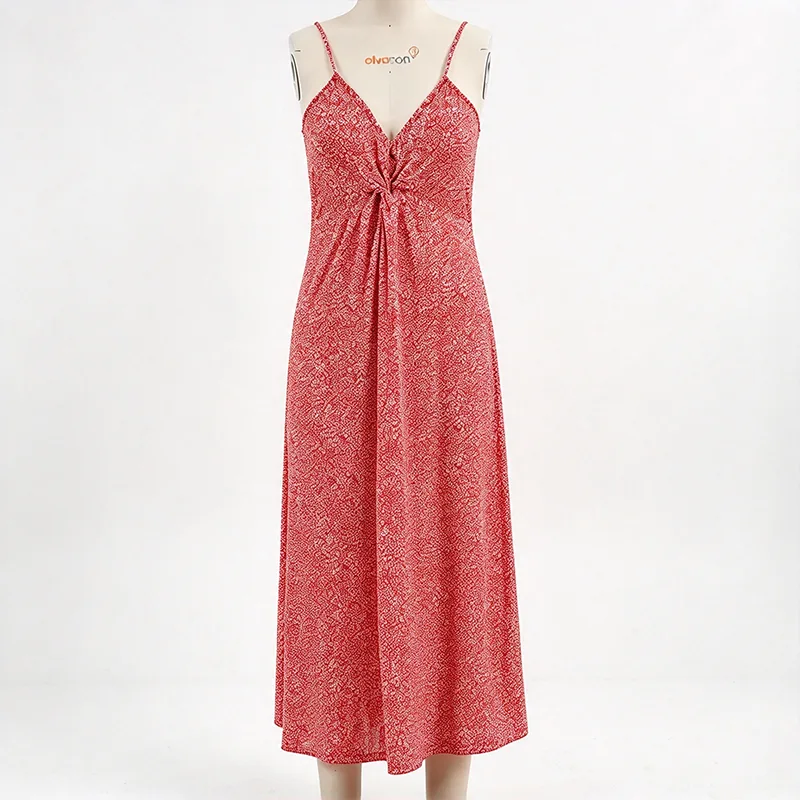
Pairs a red print with narrow straps and a twist-front detail. The print and front construction work together as the visual focus. Strap placement, bust coverage and the distribution of the pattern should be assessed as a complete composition rather than approved separately.
View Product Details →
Technical Considerations: Fabric and Movement
Beyond the initial design, a dress must perform both statically and dynamically. Below are the two critical areas to align with your sampling team.
How Does Fabric Change the Fall?
Fabric determines whether a shape follows the body, hangs away from it or holds a fold. In a close silhouette, consider stretch and recovery together with opacity. In a draped front, review how the folds settle after movement.
Patterned fabrics introduce another relationship. Vertical stripes emphasize direction, so their alignment at joins can affect the long body line. Record any important matching or placement expectations before sampling.
What Coverage Is Needed Through Movement?
Review the dress as a moving garment, including the neckline, armhole, waist and skirt opening. Coverage that appears sufficient when standing still can change when sitting, reaching or walking.
For a slip style, examine the position of straps from the side. For a dress with a slit, consider where the opening begins. Adding lining or facing after fit approval can change weight and the way the outer fabric falls.
How Can a Dress Range Offer Variation While Keeping a Clear Identity?
Build variations around a shared visual idea, such as a print family, waist treatment or neckline language. Different lengths can broaden the range, but the proportions should be reconsidered for each version rather than changed by cutting or extending the hem alone.
A shorter version may place the belt, slit and print differently within the body line. Adding sleeves may alter shoulder balance and the way the neckline sits. These changes should serve a new wearing role, giving the buyer a reason to include both garments in the assortment. Decide which part of the design is essential and which can adapt.
Dress Silhouette Development at Dongbang
Dongbang's four pattern staff and six sample-room staff support the translation of design references into garments that can be reviewed for fit and appearance. For dresses, that work is especially relevant where a neckline, waist detail or draped section changes the balance of the whole silhouette.
Development samples are normally charged and may be credited against a bulk order depending on the arrangement. A sample brief that identifies the key silhouette and coverage expectations gives this stage a specific purpose and helps focus revisions.
Frequently Asked Questions
- Can a dress be developed with pockets?
- Pockets may be considered, but their opening, bag shape and support should be reviewed for visibility and bulk, especially on a close or fluid silhouette.
- Can a removable belt use a different material from the dress?
- It can be evaluated as a separate component. Consider weight, width, fastening and the effect of the belt on the waist when tightened.
- What is the usual MOQ reference for a dress style?
- The standard reference is 500 pieces per style. Lower quantities may be considered depending on the product, with possible unit-cost impact.
- Can special packing be considered for a decorated dress?
- Packaging can be developed to buyer requirements, subject to review. Explain which surfaces or trims need protection and the intended folded or hanging presentation.
Bring the occasion, silhouette reference, and coverage requirements together in your dress brief so Dongbang can review the design priorities for sampling.
Start Your Dress Project