
Olive green offers a muted, earthy foundation for everyday casualwear, while distressed neckline and hem details introduce a subtle worn-in character. A relaxed straight silhouette, 100% cotton single jersey fabric, and open stitched sleeve ends create a versatile starting point for layered outfits. Learn how to coordinate colors, choose complementary bottoms, balance proportions, and care for intentionally distressed edges while keeping the overall look considered and comfortable.
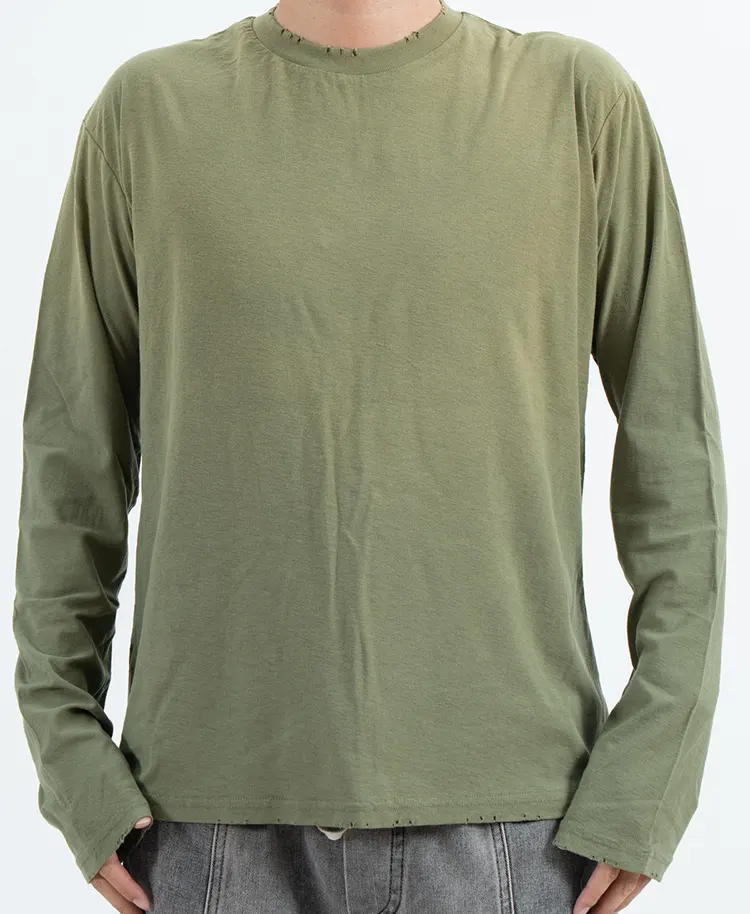
Table of Contents
Explore each section by selecting a topic below.
Understanding the Design Details
The appeal of distressed casualwear often comes from the relationship between controlled irregularity and a clean overall shape. Instead of covering the garment with prints or decorative graphics, small changes at the edges provide visual interest while allowing the main fabric surface to remain simple.
A restrained approach to distressing
The neckline and lower hem are natural places to introduce a worn-in effect because they frame the garment and define its outline. Small, separated openings create a less uniform finish than perfectly smooth edges, but the placement still needs to look intentional. When distressed marks become too large or densely grouped, they can distract from the silhouette and make the garment appear excessively damaged.
Stabilizing stitches behind the distressed openings help support the worked areas. Their position, the extent of the openings, and the spacing between marks should be assessed together during garment development. This approach keeps the visual treatment consistent with the intended design rather than allowing the distressing to dominate every part of the shirt.
Why the plain body matters
A plain chest, back, and sleeve surface provides visual breathing room around the neckline and hem. This makes the edge treatment easier to notice while keeping the garment compatible with different bottoms and outer layers. It also gives accessories, footwear, and other outfit components room to contribute without creating an overly busy appearance.
The round neckline and open stitched sleeve ends reinforce the everyday T-shirt character. Unlike ribbed sweatshirt cuffs, open sleeve ends create a simpler wrist line, which can sit naturally beneath a jacket or overshirt.
Choosing Complementary Colors
Olive green occupies a useful middle ground between neutral shades and stronger colors. Its earthy undertone works with denim, off-white fabrics, charcoal, black, and selected brown shades. The best combination depends on whether the desired outfit feels light and casual, rugged, minimal, or more structured.
Denim blue for familiar casual styling
Blue denim creates a recognizable contrast against olive green. Light-wash jeans can make an outfit feel relaxed and suitable for daytime activities, while dark indigo denim introduces a more defined outline. Straight-leg or relaxed jeans work particularly well with a straight-cut top because the overall proportions remain balanced.
Black and charcoal for a sharper appearance
Black trousers or charcoal jeans create a stronger contrast and draw attention to the green upper body. This pairing suits outfits built around simple shapes, understated sneakers, and minimal accessories. Keeping the lower half relatively clean also allows the distressed neckline and hem to remain visible.
Beige, cream, and brown for an earthy palette
Warm neutrals complement olive green without introducing a competing focal point. Cream trousers brighten the combination, beige chinos create a softer transition between colors, and brown footwear adds depth. For a coordinated outfit, choose shades with compatible undertones rather than matching every piece exactly.
| Color Combination | Visual Effect | Suggested Pairing |
|---|---|---|
| Olive and light blue | Relaxed and casual | Light-wash jeans and canvas sneakers |
| Olive and black | Defined and understated | Black straight-leg trousers and simple trainers |
| Olive and cream | Light and balanced | Cream chinos and neutral footwear |
| Olive and brown | Earthy and rugged | Brown shoes and a textured overshirt |
| Olive and charcoal | Muted and modern | Charcoal denim and a dark lightweight jacket |
Building Everyday Outfits
A versatile casual top should work with pieces already found in a typical wardrobe. The combination does not need multiple statement items. Instead, consider the contrast between fabrics, the volume of each garment, and the amount of visual detail in the complete outfit.
Weekend denim combination
Pair the shirt with medium-wash straight-leg jeans and low-profile sneakers. The denim provides enough texture to complement the distressed edges without competing with them. A simple belt and a lightweight canvas bag can complete the outfit while keeping the overall styling practical.
Minimal everyday combination
For a cleaner look, combine olive green with black or charcoal trousers. Choose a relatively plain shoe and limit visible accessories. This arrangement places greater emphasis on the shirt's shape, neckline, and lower edge instead of introducing several competing details.
Utility-inspired combination
Olive green naturally fits utility-inspired styling. Pair the top with straight-leg cargo trousers, a simple belt, and sturdy casual shoes. To prevent the outfit from becoming visually heavy, choose trousers with restrained pocket detailing and avoid stacking too many distressed elements across the entire look.
Light outerwear combination
When temperatures call for an additional layer, wear the shirt beneath an open overshirt, a lightweight field jacket, or a simple denim jacket. A neutral outer layer can frame the olive fabric while leaving enough of the neckline and hem visible to preserve the design's defining features.
- For a relaxed weekend outfit: combine denim, uncomplicated sneakers, and minimal accessories.
- For a cleaner everyday look: use charcoal trousers and a plain outer layer.
- For utility-inspired styling: choose practical silhouettes and limit competing surface details.
- For transitional weather: add an open overshirt or lightweight jacket that does not overwhelm the neckline.
Layering and Proportion
Layering works best when each garment has a clear role. A long-sleeve T-shirt can serve as the main visible layer, while an overshirt or jacket adds structure and warmth. The goal is to retain the relaxed shape without concealing every detail that makes the top distinctive.
Balance the upper and lower halves
A relaxed straight top generally pairs well with straight-leg or moderately relaxed bottoms. Slimmer trousers can create a more defined silhouette, while wider trousers emphasize a looser streetwear direction. Neither approach is inherently better; the important factor is how the garment volumes work together.
Pay attention to body length when choosing trousers. A top that falls around the hip can be worn untucked for a casual effect, while a partial front tuck can introduce a more deliberate waistline. The distressed lower edge may look best when it remains visible rather than being completely concealed by another garment.
Keep the neckline visible
Open overshirts and unfastened jackets preserve the neckline as a visible design feature. If a jacket has a high collar or substantial front detailing, leave enough space around the neck so the distressed finish does not disappear into overlapping layers.
Use accessories selectively
A simple watch, canvas tote, understated cap, or neutral belt can complement the outfit. If the shirt already has a worn-in appearance, accessories with extensive graphics or pronounced distressing may create unnecessary visual competition. Repeating one color from the footwear or outer layer is often enough to make the outfit feel connected.
Fabric, Fit, and Construction
Styling is only one part of garment evaluation. Fabric weight, surface texture, sleeve construction, and finished measurements all influence how a long-sleeve T-shirt looks when worn. Understanding these details helps clarify the intended silhouette and how the garment may work with other wardrobe pieces.
Understanding cotton single jersey
The listed construction uses 100% cotton single jersey at 180 GSM. Single jersey is a knitted fabric commonly used for T-shirts because it provides a flexible, familiar surface suited to everyday apparel. A weight of 180 GSM indicates a relatively lightweight fabric direction compared with many heavier sweatshirt fabrics, although the final hand feel and drape also depend on yarn, finishing, and fabric construction.
The olive shade creates a solid base for styling, while the absence of a prominent chest graphic keeps attention on the garment's outline. The fabric's actual color appearance can vary with lighting, display settings, and finishing, so color assessment should use an approved physical or digital color reference when consistency is important.
Understanding the relaxed straight fit
A relaxed straight silhouette provides room through the body without relying on an exaggerated oversized shape. It can be worn alone or beneath an outer layer, depending on the selected size and the wearer's preferred fit. Sleeve length and chest width should be considered together because either can change the overall proportion.
| Measurement | Size S | Size M | Size L | Size XL |
|---|---|---|---|---|
| Body Length | 70 cm | 72 cm | 74 cm | 76 cm |
| Sleeve Length | 62 cm | 63 cm | 64 cm | 65 cm |
| Half Chest Width | 53 cm | 56 cm | 59 cm | 62 cm |
Measurement note: These are development reference measurements. Half chest width is measured across the garment laid flat, not around the full body. Body length runs from the high shoulder point to the hem, excluding the neck trim. Sleeve length runs from the shoulder seam to the sleeve edge. Confirm final tolerances and measurements against the approved garment specifications.
Evaluating the edge finish
Distressing should be reviewed as a construction detail rather than simply a visual effect. The opening size, spacing, reinforcement, and surrounding fabric condition all influence the finished appearance. The neckline should retain its intended shape, and the lower edge should not develop unintended tearing during finishing or normal handling.
For Olive Long Sleeve T-Shirt with Distressed Neckline and Hem, the design depends on the contrast between a relatively plain body and small, controlled areas of wear. The garment should therefore be assessed both close up and at a normal viewing distance. Close inspection reveals stitch quality and edge stability, while a full-garment view shows whether the distressed details are balanced.
Caring for Distressed Details
Distressed openings are intentional features, but they remain areas that deserve careful handling. Appropriate care helps preserve the garment's overall shape and reduces unnecessary stress around the worked edges. The approved care label should always take priority over general garment-care suggestions.
Washing and drying
Follow the care instructions established for the final fabric and garment finish. Avoid washing methods that place excessive tension on the neckline or lower hem, and do not overload the washing machine in a way that causes garments to twist tightly together. When drying, follow the confirmed label instructions and avoid unnecessary mechanical force around the distressed areas.
Handling and storage
Do not pull the small openings to enlarge them or use the distressed edges as lifting points when handling the garment. Store the shirt folded neatly or on a suitable hanger, ensuring that the neckline is not stretched. If loose threads appear, inspect whether they are part of the intended finish before trimming them; cutting structural stitches can affect edge stability.
Maintaining the original appearance
Over time, cotton garments may change in surface texture, shape, or color depending on use and care. Compare the neckline and hem periodically if preserving a particular appearance is important. Any unexpected spreading of an opening should be assessed before further wear or repair.
Garment Evaluation Checklist
Whether assessing a finished garment or reviewing a new development, a structured inspection makes it easier to identify details that affect appearance and wearability.
- Color consistency: Check the olive shade against the agreed color reference under suitable lighting.
- Distressing placement: Confirm that the neckline and lower hem carry the intended marks while the main body remains plain.
- Edge stability: Inspect reinforcement stitching and look for unintended tearing or spreading.
- Neckline shape: Check that the round neck lies evenly after finishing.
- Sleeve construction: Confirm the open stitched sleeve ends and inspect seam finishing.
- Measurement accuracy: Measure body length, sleeve length, and half chest width against the applicable size specification.
- Overall balance: View the garment from the front and back to assess the relationship between the distressed details and the plain fabric areas.
Reviewing these points together is more useful than focusing on any single detail. A consistent garment appearance depends on color, silhouette, sewing, finishing, and measurements working together.
Frequently Asked Questions
1. What makes this olive long-sleeve design distinctive?
The design combines an earthy olive color, a relaxed straight silhouette, and small distressed areas at the neckline and lower hem. The main body remains plain, allowing the edge treatment to provide the visual focus.
2. Which bottoms work well with this style?
Blue denim, black trousers, charcoal jeans, beige chinos, and selected cargo styles can all complement olive green. The choice depends on the desired balance between casual, minimal, and utility-inspired styling.
3. What fabric and weight are specified for this garment?
The listed development specification uses 100% cotton single jersey at 180 GSM. Final fabric hand feel, color, and finishing should be confirmed against the agreed garment specifications.
4. How should the distressed neckline and hem be maintained?
Follow the approved care label, avoid pulling the distressed openings, and minimize unnecessary stress on the worked edges during washing, drying, and handling. Inspect any unexpected spreading before it becomes more pronounced.
5. What measurements are available for development?
The listed development size range is S–XL. Reference measurements cover body length, sleeve length, and half chest width. The final specification should confirm measurement methods and tolerances before production.
6. How can the distressed effect be adjusted during development?
The number, placement, spacing, and maximum extent of the distressed marks can be discussed during garment development. An approved sample can establish the intended appearance and help guide workmanship checks.
Bringing the Look Together
Successful casual styling often comes down to a few considered choices: a compatible color palette, balanced proportions, appropriate layering, and details that work together rather than compete for attention. Olive green provides a versatile foundation, while restrained distressing introduces character around the neckline and hem.
For apparel development, the same principle applies to garment construction. Fabric weight, fit, edge reinforcement, color consistency, and finished measurements should be evaluated as a coordinated set of specifications. Clear development references help maintain the intended appearance from the initial sample through subsequent production stages.
For more information about apparel development and manufacturing capabilities, visit Ningbo Haishu Dongbang Garment Co., Ltd. and explore the available service information.
Discuss Your Apparel Requirements
Have questions about garment construction, fabric selection, fit specifications, or distressed finishing? Share your requirements to discuss the details of your apparel project.
Contact Us